When I first started my business in 2005, I was working as a copywriter, writing white papers, brochures and web pages for businesses.
As I was networking to promote my own business, I noticed something interesting.
I kept meeting really talented people, usually entrepreneurs who had left successful careers to start businesses they were passionate about. They weren't just trying to make money. They genuinely wanted to make a difference.
What frustrated me was seeing how much they were struggling to get clients.
The clients they did have were getting amazing results. Their businesses were changing lives.
But they didn't know how to help the people who needed them find them.
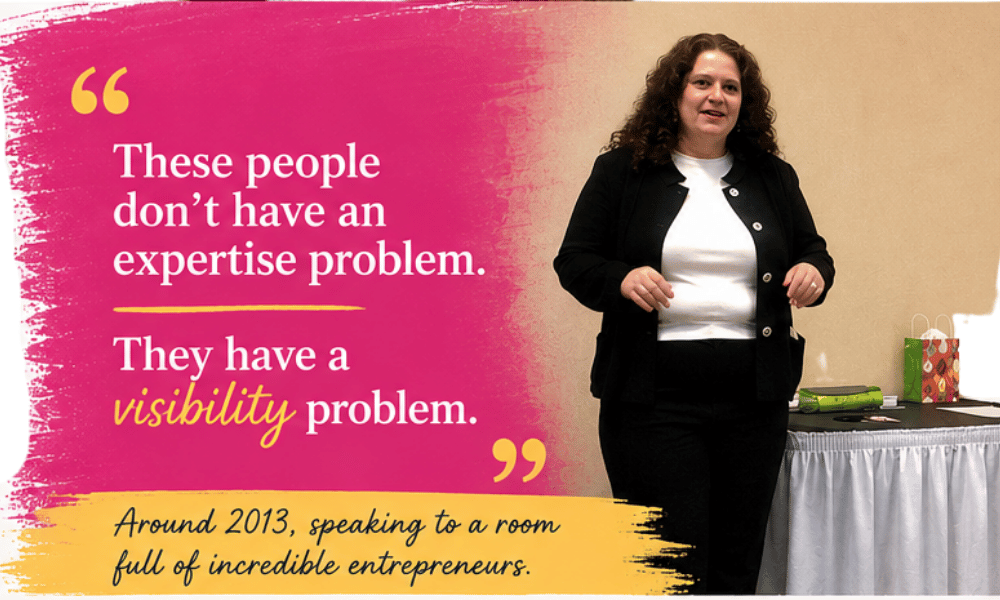
I remember thinking, These people don't have an expertise problem. They have a visibility problem.
That realization changed the direction of my own business.
I stopped thinking of myself as a copywriter and started helping entrepreneurs become more visible. Because if I could help these talented experts reach more people, they could make a bigger impact on the world.
And by helping them, I could make an impact too.
It took me years to realize there was something else these entrepreneurs had in common.
They weren't just invisible.
They were reluctant experts.
A reluctant expert is someone who's genuinely excellent at what they do but hesitates to share their expertise because they don't feel qualified enough, don't want to seem self-promotional or assume people would rather learn from someone more famous.
Over the years, I've noticed the same five patterns again and again…
1. You're Waiting Until You're “Expert Enough”
One of the biggest lies reluctant experts tell themselves is:
“I'll put myself out there once I have a little more experience.”
Maybe it's another certification.
Another training program.
Another degree.
Another testimonial.
I've worked with entrepreneurs who have MBAs, PhDs and an alphabet soup of letters after their names. They've spent years building their expertise, yet they still feel like they need one more qualification before they've earned the right to be visible.
It's as though they're waiting for someone to give them permission.
So let me be that person.
If you're reading this, I'm giving you permission right now.
You already know more than you think you do.
Will there be things you don't know? Of course.
No one knows everything.
The difference is that successful entrepreneurs don't wait until they know everything before they get started.
I've also known entrepreneurs with very little experience who jumped in, found their first client and worked incredibly hard to deliver amazing results. They learned what they needed to know as they went. They built the plane while they were flying it.
Would I recommend pretending to know something you don't? Absolutely not.
But I do recommend trusting yourself enough to take the next step, knowing you can learn, ask for help or hire expertise when you need it.
Years ago, a friend of mine who worked as a headhunter told me something I've never forgotten.
She said one of the biggest differences she noticed between men and women applying for jobs was how they read a job posting.
Many women would ask themselves:
“Have I ever done that before?”
They searched their past looking for proof that they were qualified.
Many men, on the other hand, asked a different question:
“Can I learn that?”
Neither approach describes everyone, of course, but the mindset has stayed with me.
As entrepreneurs, we need to ask ourselves that second question more often.
- Can I learn it?
- Can I figure it out?
- Can I get help if I need it?
Because here's the truth:
There will always be someone with more experience than you.
But there will also always be someone who's looking for exactly the knowledge, perspective and support you already have today.
Don't let the pursuit of becoming “expert enough” stop you from helping the people who need you now.
2. You Assume People Would Rather Learn from Someone More Famous
Have you ever caught yourself thinking:
“Why would anyone listen to me when there are so many bigger names in my industry?”
Maybe there's someone with a bestselling book.
Someone with a million YouTube subscribers.
Someone who fills stadiums or headlines conferences.
It's easy to look at people like that and decide you don't have anything valuable to add.
But I don't think that's true.
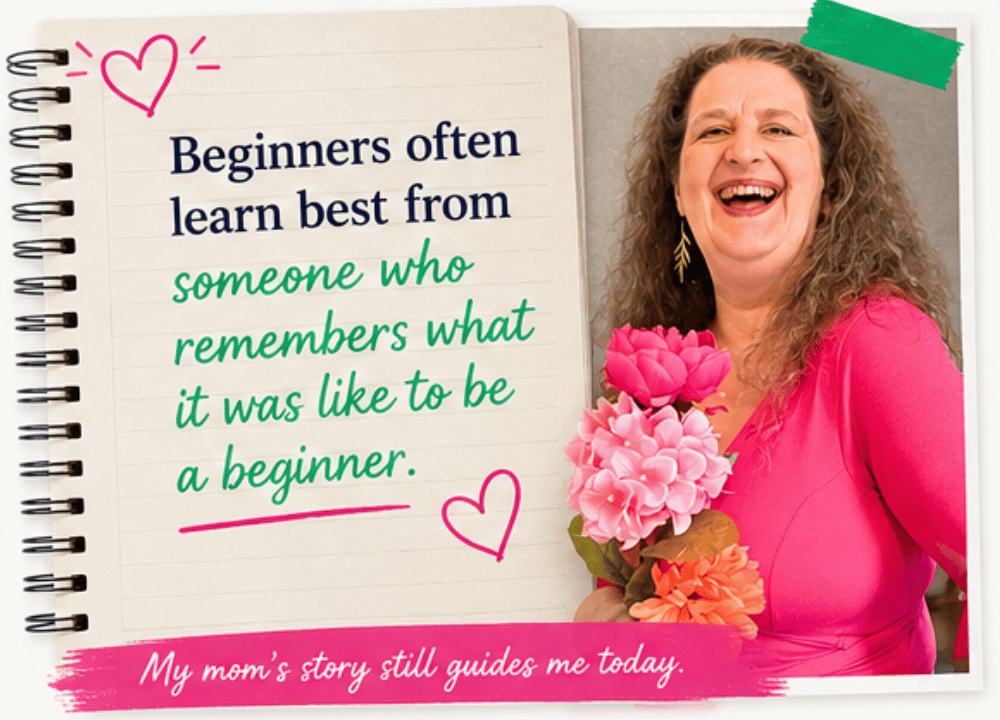
In fact, I think beginners often learn best from someone who remembers what it was like to be a beginner.
My mom was a middle school English teacher, and one year the curriculum changed. Suddenly she had to teach grammar in a much more analytical way, identifying subjects, predicates and parts of speech.
The problem?
She had never learned grammar that way herself.
So every evening she stayed one or two lessons ahead of her students. She learned the material first, then taught it the next day.
Years later she told me she thought it was some of the best teaching she'd ever done.
Because she was just learning it herself, she knew exactly where her students would get confused. She anticipated the questions before they asked them. She could explain difficult concepts in simple language because she remembered what it felt like not to understand.
That's stayed with me ever since.
Beginners often learn best from someone who remembers what it was like to be a beginner.
So don't assume that because there are people who sell out stadiums, have books on the New York Times bestseller list or YouTube channels with a million followers, you don't have anything valuable to say.
Those people are incredibly successful.
But for someone who's just getting started, they can feel out of reach.
Too far ahead.
Too intimidating.
Sometimes the most helpful teacher isn't the person at the top of the mountain.
It's the person who's a few steps ahead, reaching back and saying,
“I've been where you are. Let me show you the next step.”
If you're a few steps ahead of the people you serve, you already know enough to help them move forward.
And that's more than enough.
3. You'd Rather Keep Learning Than Start Sharing
If you're a lifelong learner, this one might sting a little.
I know it does for me.
Many reluctant experts are smart, curious people. We love reading books, taking courses, attending webinars and learning from people who are a few steps ahead of us.
Learning is our happy place.
It feels productive because, in a way, it is. Every course we take expands our knowledge and helps us serve our future clients better.
The problem is, learning is also our safe place.
When we're learning, no one is judging us.
No one can disagree with us.
No one can point out a mistake.
We don't have to risk putting ourselves out there.
In fact, I almost fell into that trap myself this morning.
I'm getting ready to start a new project that involves doing something new. I've already invested in training and sought advice from experts. I have what I need to get started.
Then an email landed in my inbox promoting another course on the same topic.
It had a slightly different perspective.
And for a moment I caught myself thinking, Maybe I should buy that first.
Not because I actually needed it.
Because buying another course felt easier than sitting down and doing the work I already knew how to do.
That's when I realized I was procrastinating in a very productive-looking way.
As an adult educator, I've learned something else over the years.
You don't truly understand something until you apply it.
Or better yet, teach it to someone else.
That's when you discover the nuances.
That's when you notice the gaps in your understanding.
That's when knowledge turns into wisdom.
And there's something even more important.
Knowledge doesn't change anyone's life while it's sitting in your notebook.
Your expertise doesn't help anyone while it's tucked away in another folder of course notes.
Information only becomes valuable when you share it.
So yes, keep learning.
But don't let learning become another way of hiding.
Someone out there needs what you already know today.
4. You Worry That Marketing Makes You Look Self-Promotional
This is probably the biggest reason reluctant experts stay invisible.
They don't want to become one of “those marketers.”
You know the ones.
Everything they post feels like a sales pitch.
Every conversation somehow circles back to buying their product.
They seem more interested in promoting themselves than helping other people.
If that's what marketing looked like to me, I'd avoid it too.
A client of mine was absolutely resistant to making videos or even posting on social media.
She kept saying things like:
“Who wants to listen to me?”
“I don't want to be a show-off.”
“It feels self-indulgent.”
“I don't want to spend my days shouting ‘Buy from me!' on social media.”
So instead of talking about video, I asked her a different question.

“Have you ever done a marketing activity consistently?”
She smiled immediately.
“Yes! I used to host a BlogTalkRadio show.”
“Why did you enjoy that?” I asked.
“Because I wasn't selling,” she said. “I was teaching. I was sharing what I'd learned and helping people.”
Then I asked her one more question.
“What makes you think you can't do exactly the same thing with video or social media?”
You could almost see the light bulb go on.
She wasn't resisting visibility.
She was resisting the version of marketing she'd created in her mind.
Today she's posting consistently, people are booking calls with her and she's being invited to speak at summits and on podcasts.
Not because she became more promotional.
Because she became more helpful.
That's when I realized something.
Visibility isn't about getting people to look at you.
It's about helping the right people find you.
The people who need your help can't hire you if they can't find you.
5. You Underestimate the Value of What Comes Naturally to You
This might be the biggest blind spot of all.
When something comes easily to you, it's tempting to assume it comes easily to everyone else.
Over the years, I've interviewed more than 100 entrepreneurs.
One pattern showed up again and again.
The thing clients valued most about them was often the very thing they dismissed.
Because it felt ordinary.
It felt easy.
It was just something they'd always been good at.
Meanwhile, their clients looked at that same ability and thought,
“How do you do that?”
I see the same thing with the entrepreneurs I work with today.
They'll spend ten minutes talking about something they think is obvious.
Meanwhile, I'm sitting there thinking,
“That's the most interesting thing you've said all day.”

They don't see it because they're inside the jar.
They can't read their own label.
That's why I love interviewing entrepreneurs.
I get to open the lid and look inside.
I get to see the stories, insights and experiences they've stopped noticing because they've lived with them for so long.
The irony is that your greatest strength rarely feels extraordinary to you.
It feels normal.
That's exactly why it's so valuable.
Someone who's struggling with the problem you solve doesn't need perfection.
They don't need the world's foremost expert.
They need someone who understands where they are, believes they can make progress and is willing to reach back and help them take the next step.
That's you.
You may not feel like an expert.
But to the person who's where you were five years ago…
You look like a wizard.
Don't hide your magic simply because you've forgotten how hard it once was to learn.
You Don't Have an Expertise Problem
If you've seen yourself in these five signs, I hope you'll stop for a moment and consider something.
What if you don't have an expertise problem?
What if you have a visibility problem?
The entrepreneurs I met twenty years ago weren't struggling because they weren't good enough.
They were struggling because the people who needed them didn't know they existed.
I've seen the same pattern ever since.
Talented people who quietly change their clients' lives.
People who genuinely care.
People who are constantly learning, improving and trying to do their very best.
The irony is that those are often the very people who hesitate to talk about what they do.
Meanwhile, someone with half the experience and twice the confidence is happily promoting themselves.
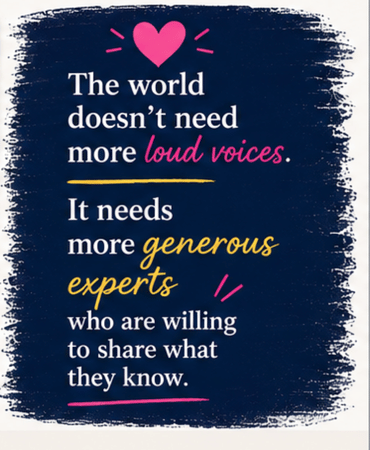
The world doesn't need more loud voices.
It needs more generous experts who are willing to share what they know.
Because every time you decide you're not qualified enough…
Every time you convince yourself someone else is better…
Every time you stay silent because you don't want to look self-promotional…
Someone who could have benefited from your experience keeps struggling a little longer.
I want you to remember something.
You don't have to be the world's greatest expert.
You don't have to know everything.
You don't have to be perfect.
You simply have to be willing to reach back and help someone take the next step.
That's what visibility really is.
Not self-promotion.
Service.
And the people who need your help can't hire you if they can't find you.
Ready to Take the First Step?
If this article resonated with you, I'd love to invite you to my free live training:
The Courage to Be Visible
How to Attract Clients Without Feeling Salesy, Self-Promotional or Fake
Sign up here: https://my.thebabyboomerentrepreneur.com/courage-to-be-visible-training
In this free class, you'll discover:
- Why visibility isn't about ego. It's about service.
- Why you don't need to be the biggest expert to make a real impact.
- A simple, sustainable approach to becoming consistently visible so the right people can discover, trust and hire you.
If you've spent too long waiting until you feel “ready,” I hope you'll join me.